What Is a Good Reaction Time: Benchmarks for Gamers & Drivers
February 7, 2026 | By Marcus Adler
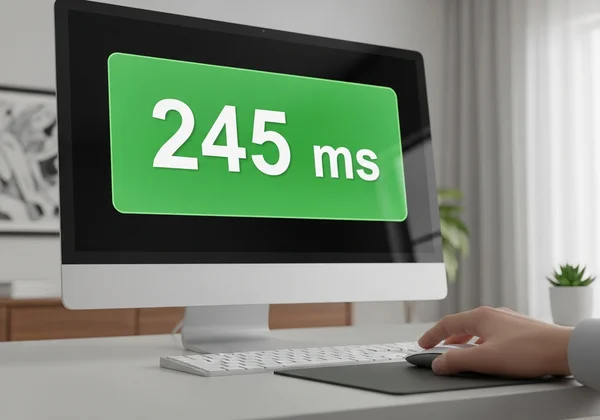
What is a good reaction time, and how do you tell if yours is fast enough for gaming or driving? In a simple visual click test, many people land around 250 milliseconds (ms) (about 0.25 seconds), while competitive benchmarks can be noticeably faster. This guide walks through common standards for gamers, drivers, and different age groups, plus the biggest reasons scores vary (like focus, fatigue, and device lag). It is meant for education and self-understanding, not medical advice or a diagnosis. If you want a quick baseline, you can try our online reaction time test before comparing your results to the ranges below.

Visual vs. Audio Reaction Time: Knowing the Difference
Before comparing yourself to a leaderboard (or a friend’s screenshot), it helps to know what you are actually measuring. Reaction time changes based on the type of signal and the type of response.
Why Audio Reflexes Are Faster (~170ms)
If you have ever reacted to a sound cue (like a starting gun or footsteps in a game), you have felt how quickly the brain can process audio. In general, auditory signals are processed faster than visual signals.
- The pathway: sound signals typically reach the brain faster than visual signals.
- The benchmark: average audio reaction time is often discussed around 170 ms in simple setups.
Visual Stimulus Standards (~250ms)
Most online tools, including typical click tests, measure visual reaction time. You see a color change and respond with a click or tap.
- The process: the brain has to detect the change, interpret it, and then send a signal to your hand.
- The benchmark: average visual reaction time in simple tests is often cited around 250 ms for many adults.
Simple vs. Choice Reaction Time
- Simple reaction time (SRT): one stimulus, one response (screen changes, you click). This is usually the fastest.
- Choice reaction time (CRT): multiple stimuli with different responses (press A for one color, B for another). This is usually slower because it includes decision-making.
Key takeaway: When you ask what is a good reaction time, compare the same test type (visual vs. audio, simple vs. choice). A 250 ms visual SRT score can be perfectly average.
What Is Considered a Good Reaction Time? (The Numbers)
Now that the terms are clear, here are practical ranges for a visual click test. These are rough tiers, not a permanent label. Also, people often search this topic as “what is a good reaction time in ms,” so the table below keeps everything in milliseconds.
The General Average (Non-Gamers)
For the general population on a typical computer setup, visual click-test tiers are often summarized like this:
- Exceptional: under 200 ms
- Good: 200–230 ms
- Average: 230–270 ms
- Below average: 270–350 ms
- Slow: over 350 ms
Benchmarks for Competitive Gamers (CS2, FPS, LoL)
What is a good reaction time for gaming depends on the game, role, and how much anticipation is involved. Still, many competitive players aim for faster-than-average visual times.
- Pro level: top-tier players are often reported around 150–180 ms on simple tests.
- Competitive amateur: many strong players land around 180–210 ms.
- The anticipation factor: in real matches, prediction and positioning often matter as much as raw reflex speed.
Reaction Time Standards for Drivers
Driving is different from a simple click test because it is usually choice reaction time (brake, steer, check mirrors) in a complex environment. Even so, reaction time still affects stopping distance.
- The scenario: at 60 mph (96 km/h), a car travels about 88 feet each second.
- The math: a 0.5-second reaction difference can translate into many feet before braking begins.
- A practical takeaway: in everyday driving, faster and more consistent responses are generally better, but real-world safety depends on attention, conditions, and decision-making—not just a single test score.

Average Reaction Time by Age (Chart & Analysis)
Reaction time often changes with age, but the pattern is not the same for everyone. Experience, training, sleep, and fitness can influence what you see on a test.
The Peak Years (Late Teens to Early 20s)
Many discussions of cognitive processing speed suggest a peak in early adulthood.
- Characteristics: fast processing and strong motor coordination.
- Typical range: roughly 210–250 ms on simple visual tests.
Decline Rates in Adulthood (30s, 40s, 50s+)
After early adulthood, reaction time often trends slower over time, but the slope varies a lot person to person.
- In your 30s–40s: some people notice modest increases, which can be offset by experience and better decision-making.
- In your 50s–60s: averages are often discussed as shifting higher, but training and lifestyle can make a meaningful difference.
Developmental Speeds for Children & Teens
Kids do not always have the fastest scores because coordination and attention are still developing.
- Under 10: scores are often slower and more variable.
- Teens (13–19): reaction time commonly improves quickly, approaching adult ranges.
- Around age 14: many teens are close to adult performance on simple tests, but it is normal to see wide variation day to day.
Why Is My Reaction Time Slow? (Key Factors)
If you scored higher than expected, it does not automatically mean you are “slow.” Scores can change based on your state (sleep, stress, focus) and on the device you used.
Biological Factors (Sleep, Hydration, Focus)
- Sleep loss: tiredness can reduce focus and slow responses.
- Hydration and meals: feeling run-down can make it harder to stay alert.
- State of mind: pressure, anxiety, or distraction can make your results more inconsistent.
The Hardware Trap: Input Lag & Monitor Hz
Device delay can add time that has nothing to do with your reflexes.
- Monitor refresh rate: higher refresh rates can reduce how long it takes for a change to appear on-screen.
- Input devices: different mice, trackpads, and phones can have different latency.
- Touchscreens: some phones can add noticeable delay compared to a wired mouse on a desktop.
A simple way to interpret results is to compare your scores on the same device over time. If you switch devices, focus on the trend rather than treating two setups as identical.
Distractions & Focus Levels
Multitasking is the enemy of speed. Background noise, notifications, and mental stress can all push your score higher.
Quick retest checklist (simple, practical):
- Use the same device and browser each time.
- Close distracting tabs and silence notifications.
- Take 5 trials and use the average, not the best single attempt.
Test Your Reaction Time: Get a Reliable Baseline
Once you know what affects scores, it becomes easier to measure consistently. If you want a baseline you can track over time, use a simple visual test and repeat it a few times.
How the Reaction Time Test Works
- Wait: watch the red box.
- React: click as soon as it turns green.
- Repeat: do 5 trials and average the result.
Discover Your Baseline (Not a Diagnosis)
Single attempts are noisy. Averaging a short set of trials can reduce randomness and help you spot trends. This tool is for educational and self-tracking purposes and is not a medical diagnostic test. If you have persistent concerns about attention, sleep, or daytime functioning, consider talking with a qualified professional for personalized guidance.
Use our reaction time test tool to check your current baseline.
How to Improve Reaction Time (Actionable Tips)
You cannot control everything (like age or genetics), but you can train for better consistency and sharpen your personal best over time.
Gaming & Cognitive Drills
- Play fast-paced games: FPS and MOBA games force quick visual processing.
- Aim trainers: tools like Aim Lab or KovaaK’s can isolate reaction-related practice.
- Rhythm games: timing-based games can strengthen hand-eye coordination.
Physical Exercise & Sleep Habits
- Aerobic exercise: regular cardio supports overall alertness.
- Sleep: consistent, high-quality sleep often helps reaction time and focus.
- Nutrition and hydration: steady energy and hydration can support concentration.
Equipment Upgrades (Mouse & Monitor)
If you have plateaued and your setup is older, hardware can influence what the test captures.
- High refresh rate monitor: smoother motion and faster on-screen updates can help.
- Low latency mouse: a responsive mouse can reduce click delay.

Conclusion: Speed Is Trainable
So, what is a good reaction time? For many people, around 250 ms is a common visual baseline in simple click tests, and getting under 200 ms is often considered excellent. The most useful comparison is usually your own trend over time—especially if you test under similar conditions.
If you want an easy way to track progress, you can save our online reaction time test and retake it occasionally with the same setup.
Frequently Asked Questions
Is a reaction time of 200ms good?
For a simple visual click test, 200 ms is commonly described as excellent. It is faster than many general-population averages in similar test formats. Keep in mind that real-world performance (gaming or driving) also depends on anticipation, decisions, and consistency—not just one number.
Is 100 ms a good reaction time?
For a visual stimulus, 100 ms is very unlikely in a true “react after the change” scenario. In many cases, scores that low come from anticipation (guessing when the change will happen) rather than purely reacting. If you want a cleaner baseline, average several trials and focus on consistency.
Is 170 ms reaction time fast?
It depends on the test type. Around 170 ms is often discussed as a typical audio reaction time in simple setups, so it can be normal there. For visual click tests, 170 ms is usually considered very fast, especially if it is repeatable across multiple trials.
What is a good reaction time for a 14 year old?
Many teens around 14 are approaching adult ranges on simple visual tests, but scores can vary a lot based on attention, sleep, and familiarity with the task. A practical approach is to take several trials, use the average, and compare your results over time on the same device rather than chasing a single “perfect” number.
Do people with ADHD have faster reflexes?
Findings are mixed, and individual differences are large. Some people with ADHD may show faster “impulsive” responses in certain tasks, while others may see more variability across trials due to attention fluctuations. This article is not a diagnostic guide. If you have concerns about attention or functioning, a qualified professional can help you evaluate your situation in context.
Is reaction time genetic?
Genetics can influence baseline factors like nerve conduction and processing speed. At the same time, practice, sleep, fitness, and your testing setup can strongly affect what you see on a reaction time test. That is why tracking your own trend over time is often more meaningful than comparing a single score to someone else’s screenshot.