Reaction Time in Physical Fitness: Meaning, Tests, Examples, and Exercises
July 21, 2026 | By Marcus Adler
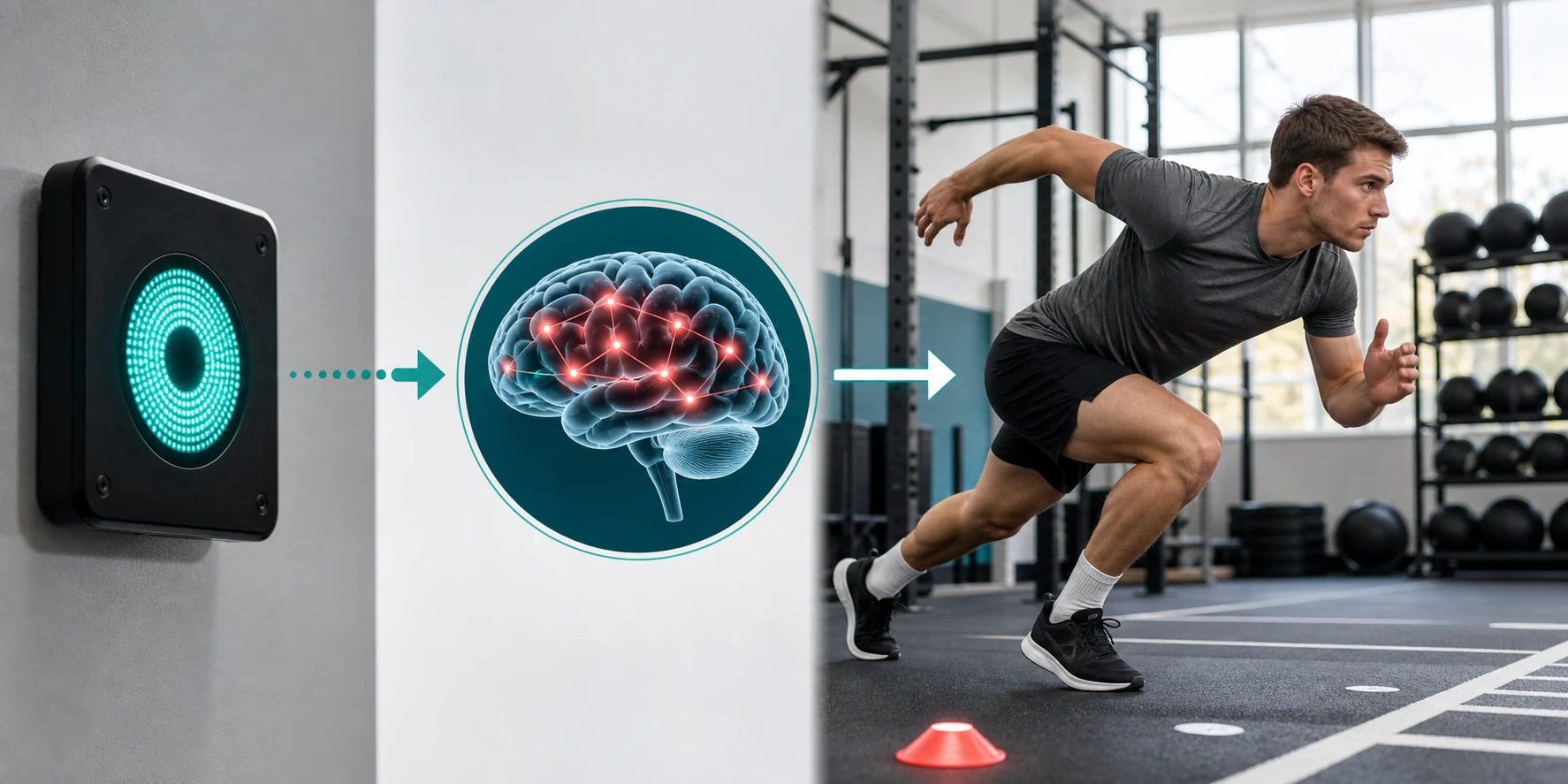
Reaction time in physical fitness is the time it takes to notice a signal, decide what to do, and begin the right movement. In PE, sports, and everyday training, it sits beside speed, agility, balance, coordination, power, and endurance because it helps turn fitness into useful action. A sprinter reacting to a start signal, a goalkeeper moving toward a shot, and an older adult stepping away from a tripping hazard all rely on the same stimulus-to-response chain. If you want a simple baseline before building drills, an online reaction time test can help you observe your current response speed without treating one score as a complete measure of fitness.
What Is Reaction Time in Physical Fitness?
Reaction time in physical fitness means the delay between a stimulus and the start of a physical response. The stimulus might be visual, such as a ball changing direction; auditory, such as a whistle; or tactile, such as contact from an opponent. The response might be a step, jump, catch, block, turn, or key press.
This is slightly different from movement time. Reaction time ends when the body begins to respond. Movement time is how long the action itself takes. Response time combines both. In a basketball example, noticing a pass and starting to move your hand is reaction time; reaching the ball and controlling it is movement time; the whole catch is response time.
That distinction matters in physical education because a student may react quickly but move inefficiently, or move powerfully but recognize the cue slowly. Good coaching separates those pieces. A useful reaction time in physical fitness test should measure a clear cue, a clear response, and the conditions around the score, such as fatigue, distractions, device delay, or whether the movement was simple or choice-based.
Why Reaction Time Matters in Sports and PE
The importance of reaction time in sports is easiest to see when the game changes faster than an athlete can plan. A tennis returner reads the serve, a soccer defender tracks an attacker's hips, and a runner listens for the start signal. In each case, fitness is not just strength or speed in isolation. It is the ability to apply those qualities at the right instant.
In PE, reaction time also helps students understand how physical literacy develops. Beginners often need obvious, predictable signals. More experienced movers can respond to changing cues while staying balanced and accurate. That progression teaches a practical idea: reaction speed is not only a number in milliseconds. It is part of a larger skill set that includes attention, anticipation, coordination, and safe body control.
Reaction time also connects to daily life. Catching a dropped object, stepping around an obstacle, and braking while driving all require rapid perception and action. Online tools, partner drills, and movement games can help people notice patterns, but scores should be interpreted as educational feedback rather than health proof. If a sudden change in coordination or alertness feels concerning, it is better to speak with a qualified professional.
Reaction Time Examples in Physical Fitness
Reaction time examples in physical fitness appear in almost every activity that includes a changing cue. Some are simple because there is one signal and one expected response. Others are complex because the athlete must choose among several responses.
| Setting | Stimulus | Physical response | Fitness qualities involved |
|---|---|---|---|
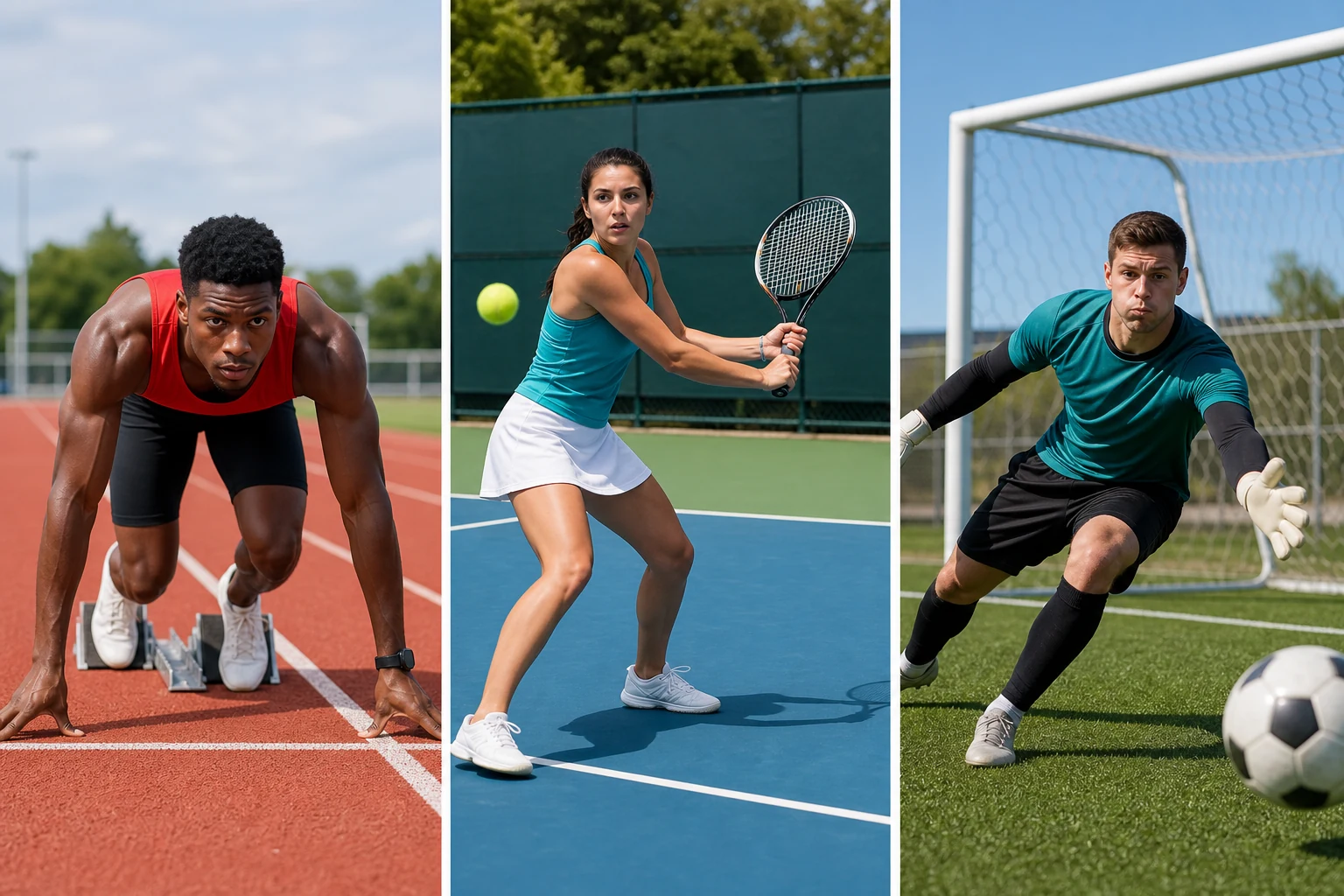
| Sprint start | Starter sound | Push off the blocks | Reaction time, power, acceleration |
| Tennis return | Serve direction | Split step and swing | Agility, coordination, visual tracking |
| Goalkeeping | Shot movement | Dive or step | Balance, speed, decision-making |
| PE tag game | Opponent's movement | Dodge or chase | Agility, spatial awareness |
| Senior balance drill | Colored cue | Step to the matching marker | Coordination, stability, attention |
These examples also show why "speed in physical fitness" is broader than running fast. Speed can mean limb speed, change-of-direction speed, perceptual speed, or the speed of choosing the correct action. Power in physical fitness also interacts with reaction time because a fast response must still be strong enough to matter. A sprinter who reacts quickly but pushes weakly may lose ground; a volleyball player who jumps powerfully but reacts late may miss the block.
How to Test Reaction Time in Physical Fitness
A reaction time in physical fitness test should match the skill you want to understand. A simple screen-based test can isolate visual reaction speed: wait for a color change, then click or tap as quickly as possible. This is useful because it reduces the movement to a small action and makes repeat trials easy.
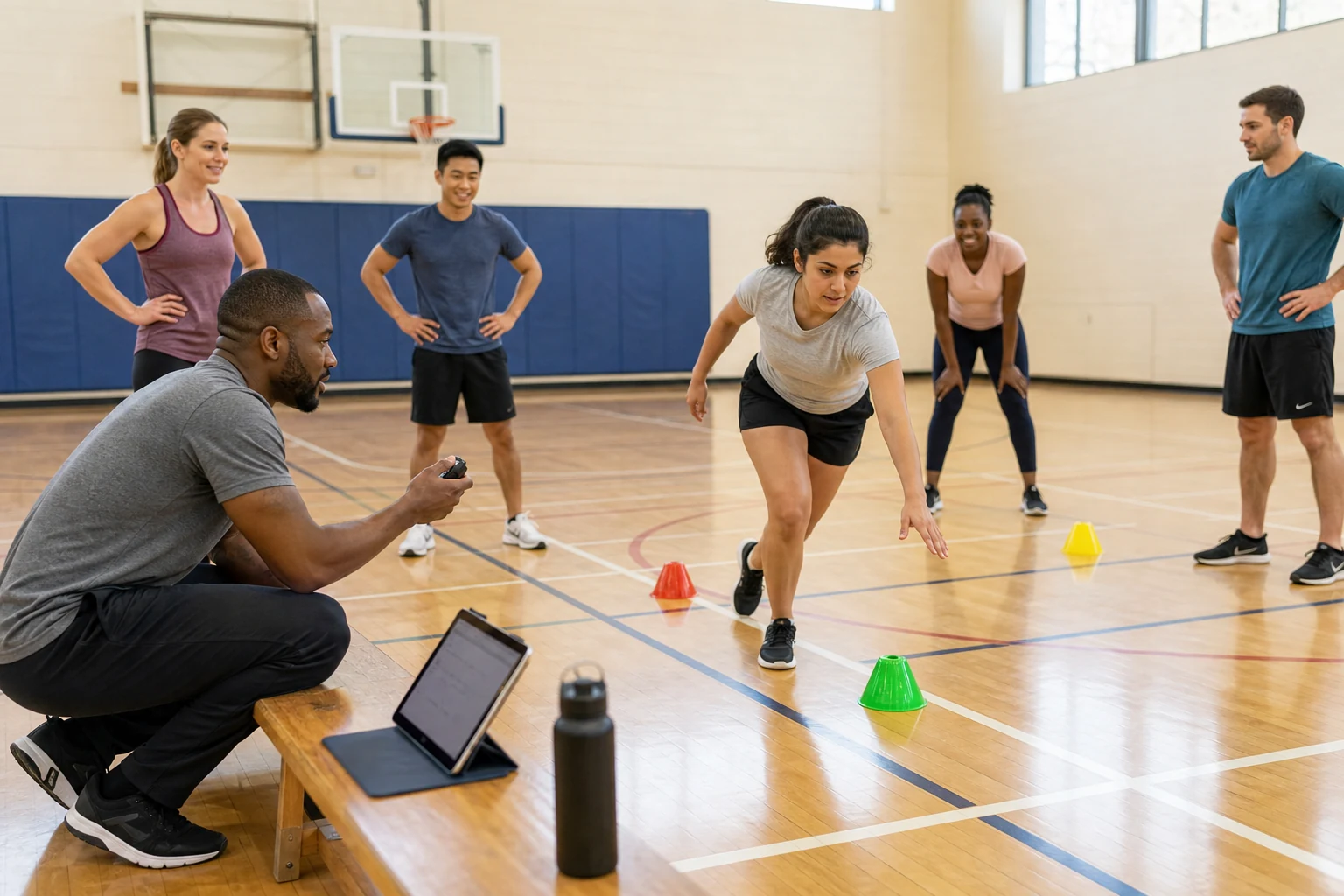
For a movement-based setting, PE teachers and coaches can use partner cues. One person gives an unpredictable signal, such as calling a direction or dropping a ball, and the other responds with a step, catch, or touch. This adds coordination and movement time, so it should not be compared directly with a screen-based millisecond score.
To make testing more useful, keep the setup consistent:
- Use the same device, surface, distance, and cue type when comparing sessions.
- Run several trials and look at the average, not the best single attempt.
- Record misses or wrong choices, because accuracy matters as much as speed.
- Test when rested and again after light fatigue if the sport demands decisions under effort.
- Avoid comparing one person's score with another's unless the conditions are similar.
A free reaction speed benchmark is most helpful when it becomes part of a repeatable routine. For example, you might record five visual reaction trials before a workout once or twice a week, then compare that trend with sleep, warm-up quality, and training load.
How to Improve Reaction Time in Physical Fitness
The best reaction time exercises combine three elements: a cue, a decision, and a controlled movement. Pure speed matters, but poor accuracy or unsafe mechanics can make a drill less useful. Start simple, then increase uncertainty only when the movement stays clean.
Here are five exercises for reaction time that work for many fitness levels:
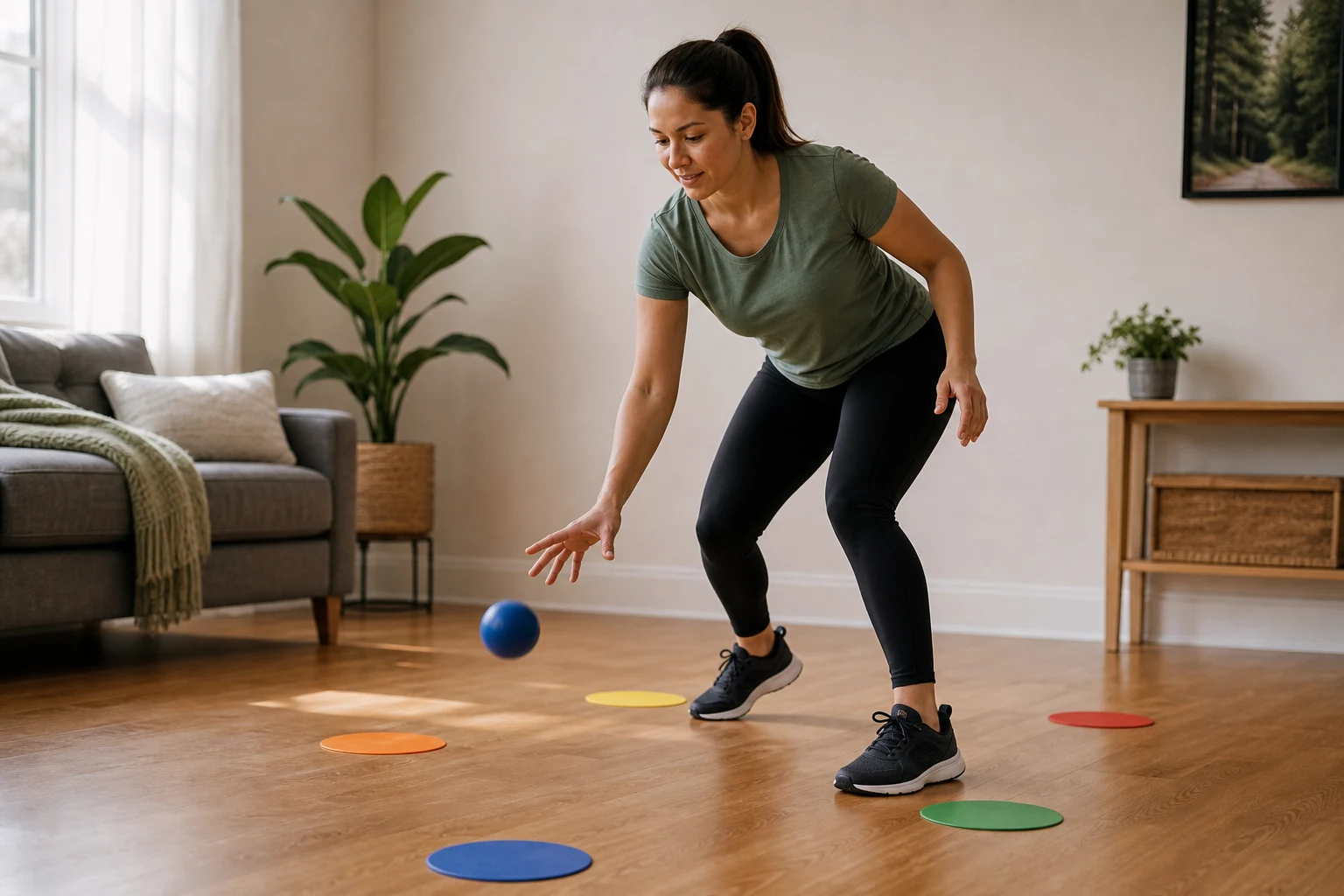
- Color call touches: Place four colored markers on a wall or floor. A partner calls a color, and you touch it as quickly as possible. Solo version: use a random timer or shuffled cards.
- Ball drop catch: A partner holds a tennis ball at shoulder height and drops it without warning. Catch it after the first bounce or before it hits the floor, depending on ability.
- Mirror shuffle: Face a partner in an athletic stance. The leader shuffles left, right, forward, or back; the follower mirrors the movement for short rounds.
- Start-stop sprint cues: Jog or shuffle, then accelerate or stop when a whistle, clap, or visual signal appears. Keep distances short so quality stays high.
- Choice step drill: Put markers in front, back, left, and right. Respond to a random direction call with one balanced step, then return to center.
Reaction time exercises at home can use simple equipment: tape marks, socks as cones, a soft ball, or a phone timer. Reaction time exercises without equipment can be as simple as responding to a partner's hand signal with a step, squat hold, or direction change.
For seniors, the priority is control. Use stable footwear, clear floor space, slower cue speed, and a chair or wall nearby if balance is limited. Exercises for seniors can focus on stepping to colored markers, catching a scarf, or responding to gentle hand signals. The goal is not to chase the fastest possible score; it is to practice attention, coordination, and safe movement.
What Affects a Reaction Time Score?
Reaction time changes from day to day. Sleep, stress, caffeine timing, fatigue, warm-up quality, age, attention, and motivation can all affect a score. The type of stimulus matters too. Auditory cues are often processed differently from visual cues, and choice reaction tasks usually take longer than simple reaction tasks because the brain must select the right response.
Technology can influence online tests. A monitor refresh rate, touchscreen delay, mouse latency, browser performance, and background apps can shift absolute numbers. That does not make testing useless. It means the fairest comparison is usually you against your own past results under similar conditions.
Context matters in sport as well. A goalkeeper's useful reaction is not just raw response speed. It includes reading body cues, staying balanced, choosing a direction, and moving with enough power to reach the ball. That is why training should include both isolated tests and sport-like drills.
Build a Simple Reaction-Time Fitness Routine
Use reaction time in physical fitness as a thread that connects measurement, practice, and reflection. A simple weekly routine might include one baseline test, two short cue-based drill blocks, and one sport-specific activity. Keep the volume modest: five to ten minutes of high-quality reaction work is often enough before fatigue turns speed practice into sloppy movement.
For a balanced session, try this format:
- Warm up with easy movement for five minutes.
- Complete three to five simple reaction trials.
- Practice one choice drill for two short rounds.
- Add one sport or PE game situation, such as reacting to a pass, call, or direction change.
- Record what improved: speed, accuracy, balance, or confidence.
This approach keeps the focus educational and practical. The number is useful, but the pattern is more useful. If your score is slower after poor sleep or a heavy workout, that is information about readiness. If you improve accuracy before speed, that is still progress. When you want a consistent reference point, the reaction time testing tool can support a simple habit of measuring, practicing, and reviewing.
FAQ
What are 5 exercises for reaction time?
Five practical exercises are color call touches, ball drop catches, mirror shuffles, start-stop sprint cues, and choice step drills. Each one uses an unpredictable signal followed by a quick but controlled movement.
What is physical reaction time?
Physical reaction time is the time between noticing a stimulus and beginning a body movement. In fitness, it can involve the eyes, ears, brain, nerves, muscles, balance, and coordination.
What is the meaning of reaction time?
Reaction time means the delay between a signal and the start of a response. In physical fitness, the signal could be a whistle, color change, moving ball, opponent movement, or partner cue.
Is a reaction time under 200 ms good?
For many simple visual online tests, under 200 ms is usually a strong score. It should still be interpreted with context because device lag, anticipation, fatigue, and test design can affect the number.
What is reaction time in PE?
In PE, reaction time is a physical literacy skill that helps students respond to signals, moving objects, opponents, and changing game situations. It develops alongside coordination, speed, agility, balance, and decision-making.
What is the difference between reaction time and speed in physical fitness?
Reaction time is how quickly you begin responding to a cue. Speed is how fast you move once the response begins. Many sports need both: early recognition plus fast, efficient movement.