Reaction Time Definition in Physical Fitness: Meaning, Examples, and Why It Matters
August 28, 2026 | By Marcus Adler
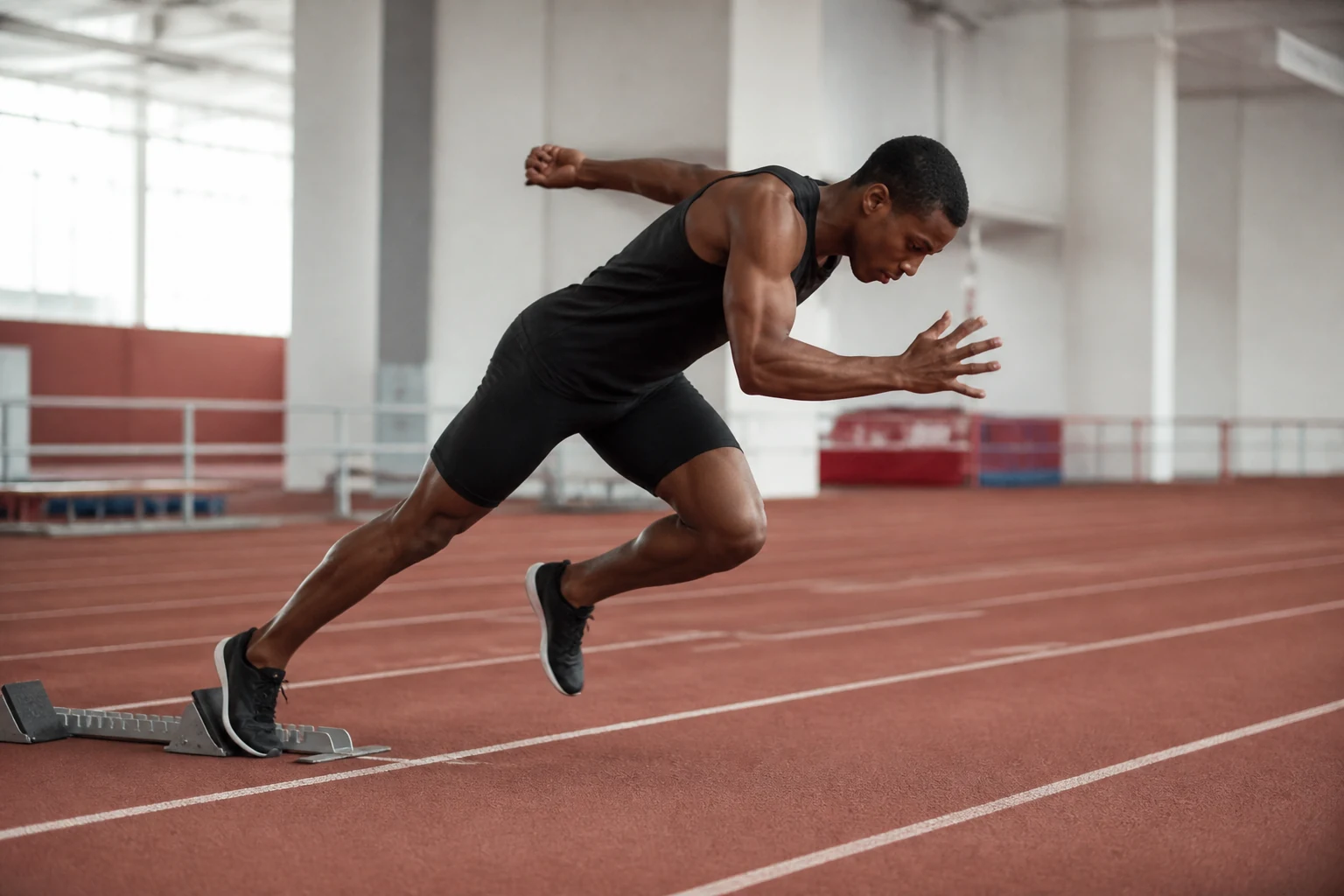
Reaction time definition in physical fitness is the time it takes to notice a stimulus, process what it means, and begin the correct movement response. In simple words, it is the gap between "something happens" and "your body starts to act." That may be a sprinter hearing the starter, a goalkeeper seeing a shot, or a student reacting to a whistle in physical education. If you want to connect the definition to your own baseline, a free reaction time test can make the idea easier to feel in milliseconds rather than just read about.
What Reaction Time Means in Physical Fitness
In physical fitness, reaction time is a skill-related fitness component. It describes how quickly a person can respond to a signal and start an action. The signal can be visual, such as a ball changing direction; auditory, such as a whistle; or tactile, such as feeling contact from an opponent. The response may be a whole-body movement, a hand movement, a foot movement, or a decision to delay movement.
A clear PE definition would be: reaction time is the interval between the presentation of a stimulus and the beginning of a voluntary response. The key word is beginning. Reaction time does not include the full sprint, the whole jump, or the complete pass. It measures the delay before movement begins.
That makes reaction time different from overall performance time. A basketball player may react quickly to a loose ball but still arrive late if their acceleration is poor. A tennis player may start moving almost instantly but miss the shot if their footwork or stroke mechanics are weak. Reaction time is important, but it works with other fitness components rather than replacing them.
What Is Reaction Time in Simple Words?
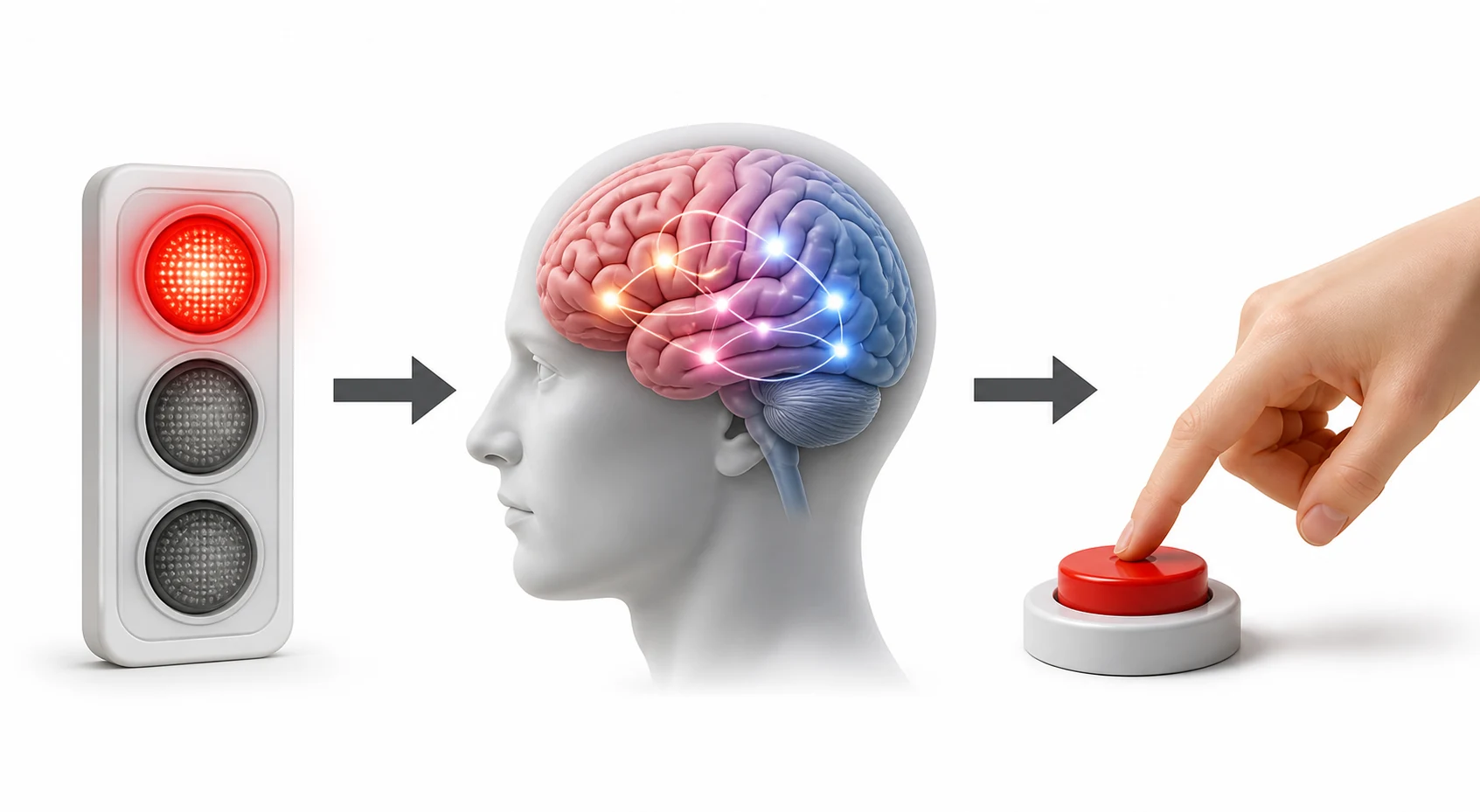
Reaction time is how fast you answer a signal with action. If a light turns green and you click, your reaction time is the time between seeing green and starting the click. If a coach claps and you sprint, it is the time between hearing the clap and starting to move.
Most simple reaction time tests use one expected stimulus and one expected response. For example, you wait for a screen color to change, then press a key or click a mouse. In everyday sport and PE, many reactions are more complex because the athlete must also choose the right response. A football player may need to decide whether the opponent is passing, shooting, or changing direction before moving.
This is why teachers and coaches often separate "quick reactions" from "good decisions." A fast but wrong response is not useful. Physical fitness rewards both speed and appropriateness: notice the signal, choose the response, then move.
Reaction Time in Physics vs Physical Education
Searchers often ask, "What is reaction time in physics?" In a broad physics or measurement context, reaction time is still a time interval. It can be described as the time between a stimulus and a response, often measured in seconds or milliseconds. A classic classroom example is dropping a ruler and measuring how far it falls before someone catches it. The distance can be converted into an estimate of response time.
In physical education, the same time-interval idea is applied to movement quality and sport performance. The stimulus might be a whistle, ball flight, opponent movement, or lane signal. The response might be a start, dodge, catch, kick, block, or change of direction.
The physics lens helps you measure the delay. The PE lens helps you ask whether the delay matters for performance. Together, they explain why reaction time is both a measurable time value and a practical movement skill.
Reaction Time Examples in Physical Fitness
Reaction time examples are easiest to understand when the stimulus and response are named clearly. Here are common PE and sport examples:
| Situation | Stimulus | Response |
|---|---|---|
| Sprint start | Starter sound | Push out of the blocks |
| Football defending | Attacker changes direction | Shift feet and close space |
| Goalkeeping | Shot leaves the foot | Dive or set hands |
| Tennis return | Ball leaves opponent's racket | Step and swing |
| Basketball rebounding | Ball hits the rim | Jump or box out |
| Dodgeball | Ball is thrown | Catch, dodge, or block |
| Driving practice | Brake lights appear | Move foot toward the brake |
In each case, reaction time is not the entire action. It is the first delay before the action begins. The rest of the performance depends on speed, strength, balance, technique, agility, coordination, and decision-making.
A useful test question is: "What did the person react to?" If you can identify the stimulus, you can explain the reaction time example more precisely.
Simple, Choice, and Sport-Specific Reaction Time
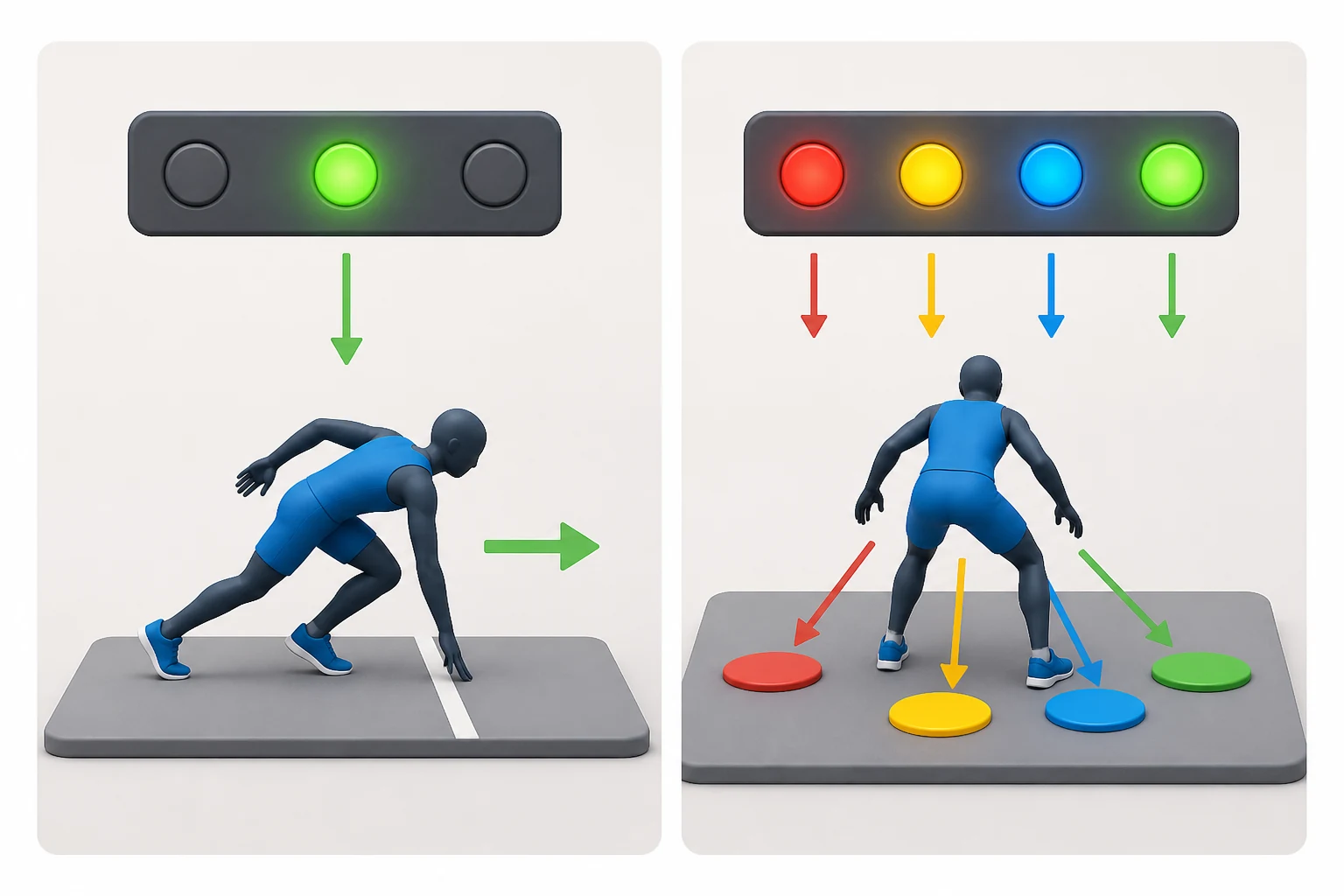
Simple reaction time happens when there is one signal and one response. A light appears, and you press a button. A whistle sounds, and you start running. These tests are useful because they isolate basic stimulus-response speed.
Choice reaction time happens when there are multiple possible signals or responses. You may need to click only when the color is green, press the correct key for a direction, or move only when the attacker actually commits. Choice reaction time is usually slower than simple reaction time because the brain must identify the stimulus and select the correct response.
Sport-specific reaction time adds even more context. Athletes do not react to isolated lights forever; they react to body position, ball spin, field spacing, teammates, and tactical cues. A player with strong sport knowledge may appear faster because they anticipate likely outcomes earlier. That is not magic. It is pattern recognition built from practice.
For online testing, simple reaction tasks can still be valuable because they give a consistent baseline. For training transfer, athletes should also practice realistic cues from their sport.
Why Is Reaction Time Important?
Reaction time is important because many physical tasks reward the first useful movement. In a sprint, a slow start can cost distance. In football, a defender who reacts late may lose the angle. In tennis, a late first step can turn a reachable ball into a forced error. In driving, even a small delay can increase stopping distance.
Reaction time also supports safety and confidence. In PE classes, students who recognize signals quickly may move more smoothly through drills. In team sports, players who react well can adjust to crowded, changing situations. In gaming and aim training, faster response timing can make controls feel more connected.
However, reaction time should not be treated as a single score that explains every outcome. Fatigue, attention, sleep, stress, warm-up, equipment, screen refresh rate, input lag, and the complexity of the task can all affect results. That is why a score is best viewed as a performance snapshot, not a permanent label.
Reaction Time, Speed, and Power in Physical Fitness
Reaction time is often confused with speed and power. They are related, but they are not the same component.
Speed in physical fitness is the ability to move the body or a body part quickly. Sprinting 30 meters, moving the feet in a ladder drill, or swinging a racket fast are speed examples. Speed begins after the reaction has already started.
Power in physical fitness means producing force quickly. Jumping, throwing, sprint starts, and explosive changes of direction all rely on power. Power helps turn a quick decision into a strong movement.
Reaction time is the delay before movement begins. Speed is how fast the movement happens. Power is how forcefully and explosively the movement is produced. A complete athlete often needs all three: react early, move fast, and apply force efficiently.
How to Measure Reaction Time
Reaction time is usually measured in milliseconds. One second equals 1,000 milliseconds, so a result like 250 ms means one quarter of a second. In a simple online test, the timer starts when the stimulus appears and stops when the user responds.
For a fairer baseline, keep conditions consistent:
- Use the same device, browser, and input method when comparing sessions.
- Sit at a comfortable distance from the screen.
- Warm up with a few practice attempts before recording results.
- Avoid comparing a tired late-night score with a rested morning score.
- Run several trials and look at the average, not only the best attempt.
Online tools can be useful, but they include hardware factors. Display refresh rate, keyboard latency, mouse latency, and browser timing can influence the number. That does not make the practice useless; it means the most meaningful comparison is often your own trend under similar conditions.
For a practical baseline, you can use reaction speed practice tools to compare simple, color, corner, and key-based responses. Different modes can reveal whether your challenge is basic response speed, selection, spatial attention, or keyboard coordination.
How to Improve Reaction Time for Fitness and Sport
Improving reaction time usually means improving three layers: attention, recognition, and movement readiness. You want to notice the cue, understand it, and begin the right action with less delay.
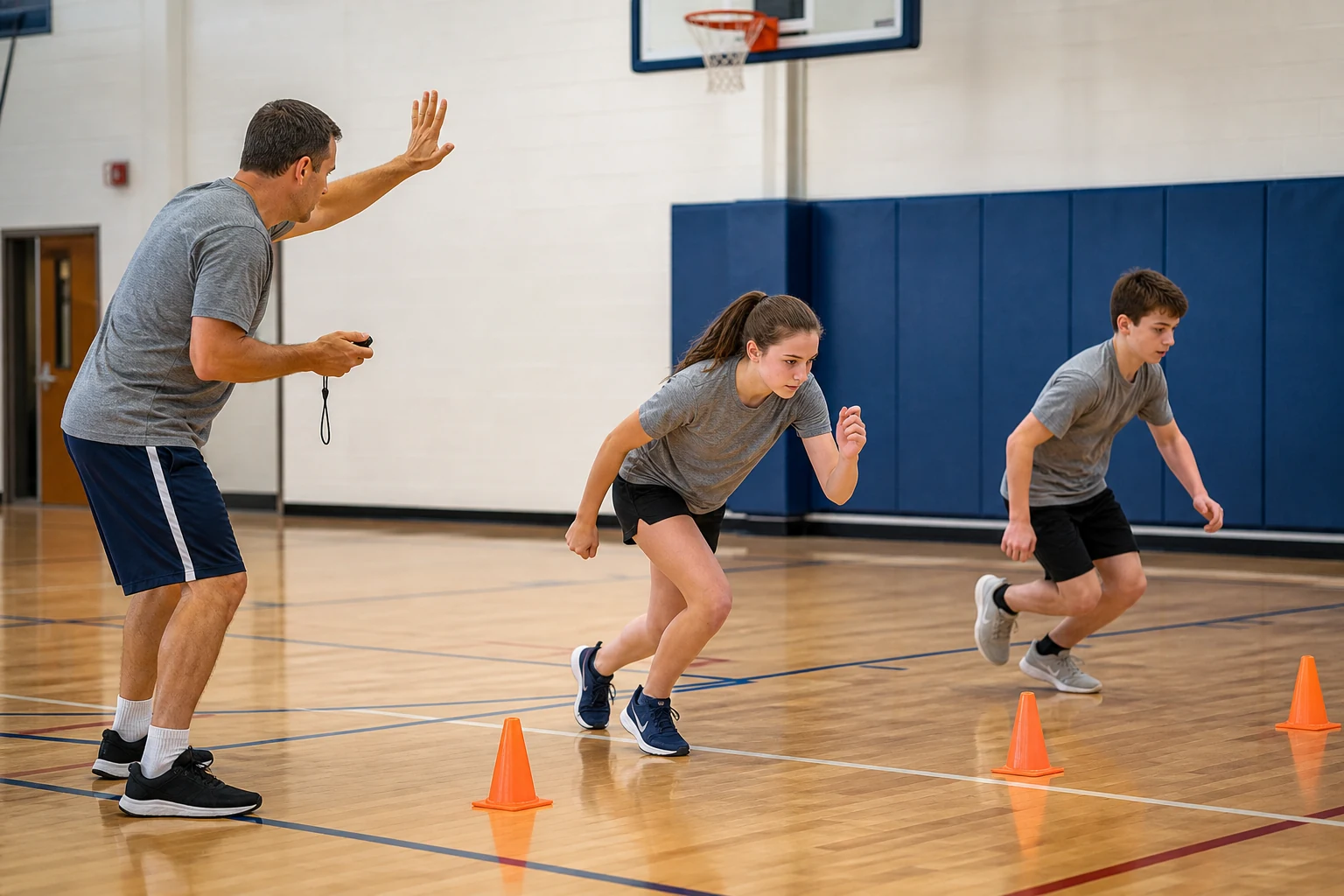
Start with simple reaction drills. Use a light, clap, whistle, partner signal, or screen cue. Keep the response easy so the focus stays on reacting quickly. Then add choice. For example, move only on one color, sprint in the direction a partner points, or press the matching key for a cue.
Next, make drills more sport-specific. A football player can react to an attacker's hips or first touch. A goalkeeper can react to shots from varied angles. A tennis player can practice split-step timing and return reads. The goal is not just raw speed; it is faster recognition of meaningful cues.
Recovery matters too. Sleep, hydration, warm-up, and mental focus affect reaction performance. If your reaction time is suddenly much slower than usual, consider ordinary factors such as fatigue, distraction, unfamiliar equipment, or lack of warm-up. If a change feels unusual or concerning in daily life, seek qualified professional guidance.
A Practical Way to Use Reaction Time in Your Training
The best way to use reaction time definition in physical fitness is to turn it into a repeatable observation. Choose one reaction task, record several attempts, note your average, and repeat under similar conditions. Then pair that number with sport practice instead of treating it as the whole story.
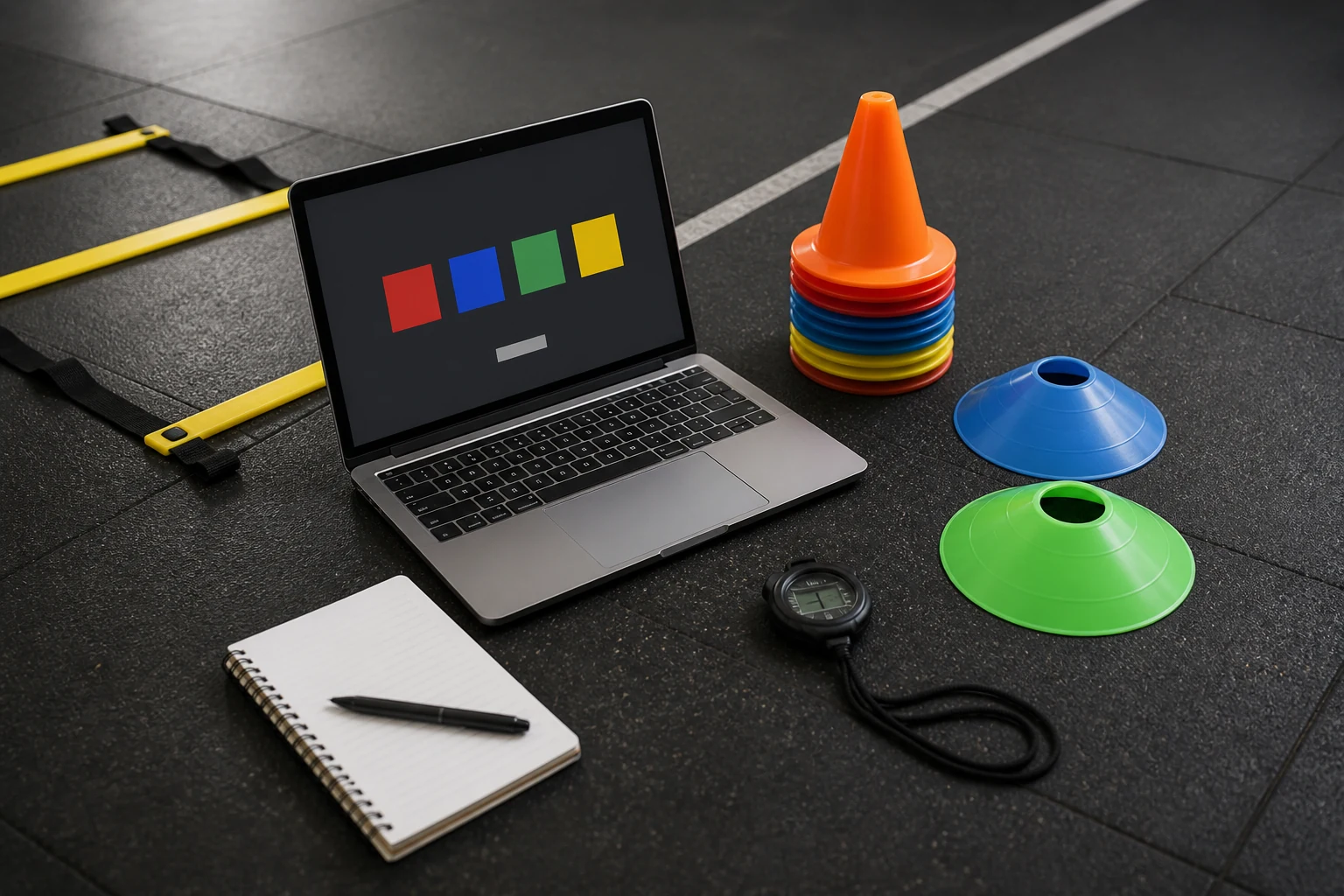
A simple weekly plan might include one baseline session, one choice-reaction drill, and one sport-specific cue drill. For example, a football player could record a basic response score, practice left-right cone reactions, then finish with first-step defending cues. A PE student could compare whistle starts, color cues, and partner-direction drills.
Keep the goal low-pressure: explore patterns, notice what affects your score, and build better readiness over time. An online reaction time benchmark can support that reflection, especially when you use the same setup and focus on trends rather than one perfect result.
FAQ
What is reaction time in simple words?
Reaction time is how long it takes to respond after something happens. In physical fitness, it usually means the time between a signal, such as a whistle or moving ball, and the start of your movement.
What is an example of reaction time in physical fitness?
A sprinter starting after the starter sound is a simple example. The sound is the stimulus, and the athlete's first push from the blocks is the response.
What does reaction time mean in PE?
In PE, reaction time means the delay between noticing a cue and beginning the correct movement. It is a skill-related fitness component used in games, starts, defensive movement, catching, dodging, and coordination drills.
What is reaction time in physics?
In physics-style measurement, reaction time is a time interval between a stimulus and a response. It may be measured with a timer, a screen cue, or a ruler-drop activity. PE applies that interval to movement and sport performance.
Why is reaction time important in football?
Football requires players to respond to passes, shots, tackles, direction changes, and open space. A faster useful reaction can help a player close an angle, start a run, or adjust body position before an opponent gains advantage.
Is reaction time the same as speed?
No. Reaction time is the delay before movement begins. Speed is how quickly the movement happens after it starts. A player can react quickly but still need better sprint speed, footwork, or acceleration.
Can reaction time improve with training?
Reaction performance can often improve with consistent practice, better attention, sport-specific cue recognition, warm-up, and recovery habits. Results vary by person and testing conditions, so track trends instead of relying on one score.