Mental Training for Faster Reactions: Cognitive Exercises
December 25, 2025 | By Marcus Adler
In competitive gaming, high-performance sports, and even daily life, a fraction of a second can change everything. The 200-300 millisecond gap between seeing a stimulus and reacting to it is often the line between victory and defeat, safety and danger. How can you gain an edge when physical practice reaches its limit? While many look to expensive hardware or endless drills, the real advantage lies within your own mind.
The secret to lightning-fast reflexes isn't just about training your muscles; it's about optimizing your brain's neural pathways. Top-tier performers know that cognitive conditioning is a powerful tool for sharpening focus and accelerating decision-making. This guide will explore evidence-based mental training techniques that can help you slash your reaction time.
Before we dive into the methods, it's essential to have a baseline. Understanding your current reaction speed is the first step toward improvement. You can measure your reflexes in milliseconds with a quick and simple reaction time test. This article will show you how to train your brain to lower that score.
Understanding the Neuroscience Behind Reaction Time
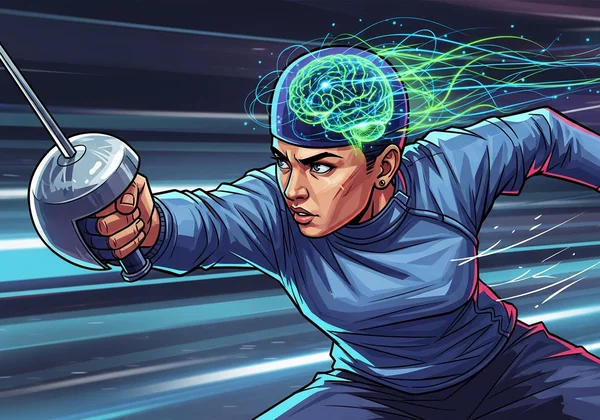
Before you can improve your reaction speed, it helps to understand what's happening inside your brain. Your reaction time isn't a single event. It's a complex process involving perception, processing, and physical response. By understanding the underlying neuroscience, you can target your training more effectively.
How Neural Pathways Determine Your Reflex Speed
Think of your brain as a massive city with roads connecting different neighborhoods. When you see something—like a target in a game or a traffic light changing—a signal travels from your eyes to your brain. This signal zips along specific routes called neural pathways. It arrives at a processing center where your brain makes a decision, and then another signal is sent to your muscles, telling them to act.
The efficiency of these neural pathways directly determines your reflex speed. Faster, more direct "superhighways" in your brain lead to quicker reactions. Slower, less-developed routes result in delays. Mental training helps to strengthen and streamline these pathways, reducing the time it takes for a signal to travel from perception to action.
Myelin Sheath Development and Signal Transmission
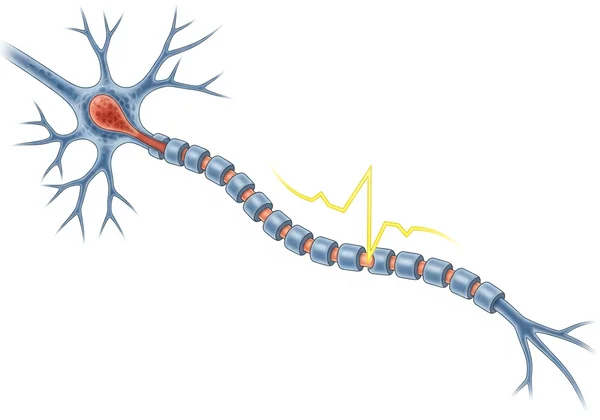
To understand how these pathways get faster, we need to look at myelin. The myelin sheath is a fatty, insulating layer that wraps around your nerve cells (neurons), much like the plastic coating on an electrical wire. This insulation prevents the electrical signal from losing strength and allows it to travel much faster.
Every time you practice a skill, you reinforce the neural pathways associated with it. This repeated use encourages the production of myelin, a process called myelination. More myelin means a thicker, more effective sheath, leading to faster signal transmission and, ultimately, quicker reaction times. Cognitive exercises work by repeatedly activating specific pathways, promoting this crucial myelination process. You can track these small but significant gains by regularly checking your progress with a reflex test.
Mental Training Exercises That Boost Reaction Speed
Now that you understand the science, let's explore practical cognitive exercises you can use to train your brain. These methods are designed to improve focus, memory, and predictive abilities—all key components of a fast reaction time.
Mindfulness Meditation for Enhanced Focus
Mindfulness meditation is the practice of paying attention to the present moment without judgment. It might seem counterintuitive for improving speed, but its benefits are profound. Distractions, both internal (stray thoughts) and external (background noise), add precious milliseconds to your reaction time. Mindfulness trains your brain to filter out this noise.
By practicing meditation, you strengthen your prefrontal cortex, the part of the brain responsible for focus and attention. This heightened state of awareness, known as "attentional control," allows you to dedicate more cognitive resources to the task at hand. You become better at noticing critical signals and ignoring irrelevant ones, leading to a faster and more accurate response.
Dual N-Back Training for Working Memory Enhancement
Dual N-Back is a challenging brain game that directly targets your working memory. Your working memory is like your brain's RAM—it's the temporary information you hold and manipulate to perform tasks. When you react to something, you are constantly updating your working memory with new information about your environment.
In a Dual N-Back task, you are presented with a sequence of visual and auditory stimuli simultaneously. Your job is to press a key if the current stimulus matches one from 'N' steps back in the sequence. This forces you to constantly update, monitor, and compare information, strengthening the neural circuits that support working memory and processing speed. A stronger working memory allows you to process complex situations faster, which is critical for making quick decisions under pressure.
Anticipation Drills for Predictive Speed
Simple reaction time is about responding to a stimulus you know is coming. But in the real world, the best performers don't just react—they anticipate. Anticipation is the ability to predict what will happen next based on patterns and cues. This is a cognitive skill that can be trained.
To practice this, engage in drills where you must predict an outcome. For example, watch recordings of your favorite game or sport and try to predict a player's next move before they make it. Pause the video and say your prediction aloud. This exercise trains your brain to recognize subtle patterns and cues, allowing you to initiate your response before the event even fully unfolds. This "predictive speed" can give you a massive advantage over opponents who are only relying on raw reflexes. Ready to see if your training is working? Start your test and find out.
Sport-Specific Mental Training Protocols
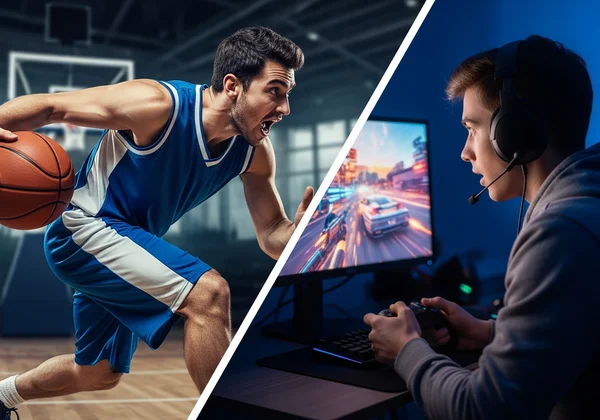
While general cognitive exercises are beneficial for everyone, tailoring your mental training to your specific discipline can yield even better results. Gamers and athletes face different types of challenges, and their training should reflect that.
Gamer Training: Peripheral Awareness and Target Tracking
In fast-paced games like FPS or MOBAs, information comes from all corners of the screen. Top gamers have exceptional peripheral awareness—the ability to process information outside of their direct line of sight. To train this, you can use specialized software designed to present stimuli in your peripheral vision.
Another key skill is target tracking. This involves keeping your focus locked onto a moving target while remaining aware of your surroundings. Practice this by playing aim-training games that force you to follow erratic patterns. This mental drill strengthens your ability to maintain focus and react instantly to changes in a target's movement, a critical skill for any competitive gamer.
Athlete Training: Decision Speed Under Pressure
For athletes, reaction time is often tied to making the right choice under intense physical and mental pressure. A boxer must decide whether to block, dodge, or counter in a split second. A tennis player must predict the ball's trajectory and choose the correct return shot.
To train decision speed, athletes can use simulation drills. This involves watching game footage from a first-person perspective and calling out the correct action for each scenario. This visualization technique builds the neural pathways for specific game-time decisions, making them more automatic. Regularly practicing these mental scenarios helps athletes reduce cognitive load during actual matches. This frees up mental resources, enabling faster and more instinctual reactions.
Your 8-Week Mental Training Roadmap
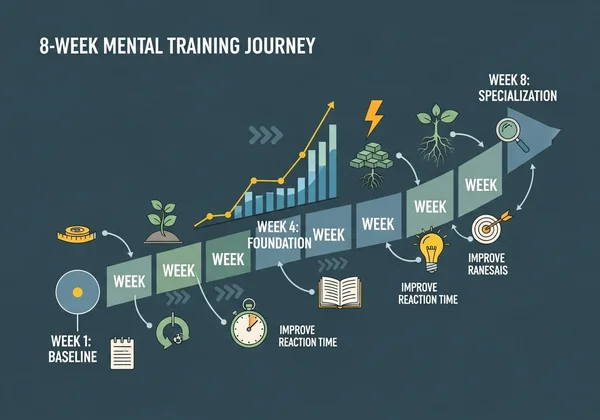
Mastering faster reactions requires consistent daily practice rather than occasional intense sessions. It requires consistent effort, but the results are well worth it. You don't need a complex plan to start seeing progress. Here is a simple roadmap to guide your first two months:
- Baseline Measurement: Your first step is to establish your current performance. Go to ReactionTimeTest.net and take the test 5-10 times to get a reliable average score. Write it down.
- Weeks 1-4 (Foundation): Focus on consistency. Dedicate 10-15 minutes each day to one or two exercises. We recommend starting with mindfulness meditation to build your foundation of focus, paired with regular testing to monitor initial changes.
- Weeks 5-8 (Specialization): Continue with your foundational practice, but now add more specialized drills. Gamers can incorporate target tracking exercises, while athletes can begin visualization and decision-speed drills.
The key to success is measurement. By testing your reaction time weekly, you can see tangible proof that your mental training is working. This data will keep you motivated and help you understand which exercises are most effective for you. Don't just practice blindly; train intelligently, measure your progress, and unlock a new level of performance.
Ready to start your journey? Try our free tool now and discover your starting line.
FAQ Section
How long does it take to see results from mental training exercises?
You can often see small, measurable improvements within 2-4 weeks of consistent practice (10-15 minutes per day). However, significant and lasting changes in neural pathways typically take 8-12 weeks of dedicated training. For optimal results, prioritize regular 15-minute sessions over occasional hour-long cram sessions.
Can mental training compensate for slower natural reflexes?
Absolutely. While genetics play a role in your baseline reflex speed, mental training can make a huge difference. By improving focus, anticipation, and decision-making, you can significantly reduce your overall response time, often outperforming individuals with faster raw reflexes but less cognitive training. It's about making your brain more efficient. You can easily see your results improve over time.
Is dual n-back training more effective for gamers or athletes?
Dual N-Back is beneficial for both, but it's particularly effective for roles that require managing multiple streams of information under pressure. This makes it invaluable for MOBA gamers tracking cooldowns and map movements, or for a point guard in basketball who needs to be aware of teammates, defenders, and the clock simultaneously.
How does mindfulness specifically improve reaction time?
Mindfulness improves reaction time primarily by enhancing attentional control. It trains your brain to sustain focus on a task and resist distractions. This means when a critical stimulus appears, your brain is already "in the zone" and can process it without the delay caused by stray thoughts or external noise, leading to a purer, faster response.
What's the ideal frequency for cognitive training sessions?
For most mental exercises, consistency is more important than duration. Aim for short, frequent sessions. Practicing for 15-20 minutes, 4-5 days a week, is generally more effective than one long session on the weekend. This regular stimulation helps reinforce neural pathways and promotes myelination more effectively.