Human Reaction Time: Averages, Factors, and How to Measure Speed
February 20, 2026 | By Marcus Adler
Have you ever felt a split-second delay while driving or playing your favorite game? You are not alone. That tiny gap between seeing an event and moving your muscles is your human reaction time. It is a fundamental part of how we interact with the world every single day. Whether you are avoiding a sudden obstacle on the road or clicking a mouse during an intense match, milliseconds truly matter. In this guide, we will explore the science of neural pathways and reveal global benchmarks for speed. You will discover exactly how fatigue, age, and even your computer hardware influence your performance. We will also provide clear steps and a checklist to help you measure and understand your own speed accurately. You can even explore our reaction time test online to see where you stand right now.

The Science: What Happens Between Stimulus and Action?
Every time you react, your body performs a complex sequence of biological events. Scientists define human reaction time as the time elapsed between the presentation of a sensory stimulus and the subsequent behavioral response. It is a conscious process that requires your brain to receive, interpret, and act upon information. This is different from a reflex, which is an involuntary and nearly instantaneous movement in response to a stimulus.
The Neural Loop: From Perception to Motion
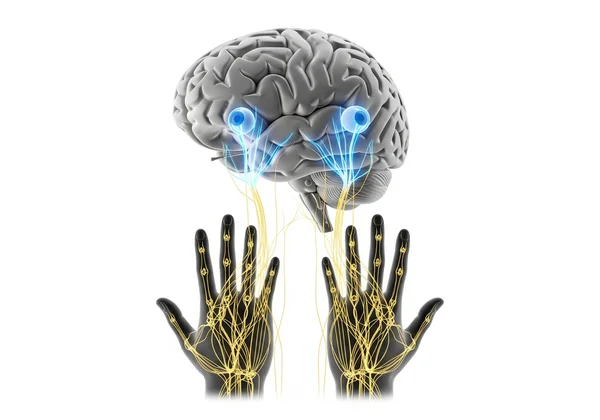
Your reaction begins when a stimulus, such as a flash of light or a loud sound, hits your sensory organs. For a visual cue, the signal travels from your eyes via the optic nerve to the visual cortex. Next, the brain processes this data and decides on a course of action. Finally, a command travels down your motor neurons to your muscles. This entire loop happens in a fraction of a second. However, each "stop" along this neural highway adds a small amount of time to your total human reaction time.
Reaction vs. Reflex: Why You Can’t "Think" a Reflex
Many people use the words "reaction" and "reflex" interchangeably, but they are neurologically distinct. A reflex, like pulling your hand away from a hot stove, bypasses the brain’s conscious processing centers. Instead, the signal goes to the spinal cord and immediately back to the muscle. Because it skips the "decision-making" step, a reflex is significantly faster than any conscious reaction. Understanding this difference helps you realize that your reaction speed is a measure of your cognitive processing, not just raw physical speed.
Human Reaction Time Benchmarks: What’s "Normal"?
When we talk about being "fast" or "slow," we need a standard for comparison. For decades, researchers have studied the average human reaction time to establish reliable baselines. While every individual is unique, most healthy adults fall within a predictable range. These benchmarks vary depending on which sense is being used to trigger the movement.
Average Visual vs. Auditory Response Times
If you are looking at a screen waiting for a color change, your normal human reaction time is likely around 250 milliseconds (0.25 seconds). Meanwhile, the average reaction to a sound is faster, typically around 170 milliseconds. Why is sound faster? The auditory stimulus reaches the brain faster than visual signals, and the auditory cortex has a shorter processing path. When you use a reaction time test, you are usually measuring visual speed, which is the most common requirement in modern life.
Elite Speed: From F1 Drivers to Pro Gamers
In high-stakes environments, the numbers drop significantly. An average human reaction time f1 driver often boasts a range between 150ms and 200ms. They train their nervous systems to anticipate patterns and respond with extreme precision. Similarly, the average human reaction time for gamers often hits the sub-200ms range. However, even these elite performers are bound by biology. They rely on "predictive" movement and muscle memory to shave off precious milliseconds that the average person might lose to hesitation.
The 100ms Barrier: Understanding Physiological Limits
In the world of competitive athletics, 100 milliseconds is often considered the "human limit." For example, in Olympic sprinting, any reaction to the starter pistol under 100ms is flagged as a false start. The logic is simple: it takes at least 0.1 seconds for the sound to reach the brain and for the brain to trigger the muscles. Therefore, reaching the fastest human reaction time milliseconds under this threshold is considered anticipation or a guess, rather than a genuine reaction.
6 Critical Factors That Influence Your Reaction Speed
Your speed is not a fixed number. It fluctuates based on your internal state and your external environment. By understanding these factors, you can better interpret your results and identify why you might feel slower on certain days.
- Age: Research suggests that our raw reaction speed peaks in our late teens or early 20s. After 24, most people see a very gradual decline in cognitive processing speed.
- Fatigue: Being awake for 18 hours can impair your reactions as much as having a blood alcohol concentration of 0.05%.
- Alcohol and Dehydration: Alcohol is a central nervous system depressant. It slows the firing of neurons, directly impacting human reaction time driving safety.
- Caffeine: A moderate amount of caffeine can improve alertness, but too much can lead to tremors that interfere with precise movements.
- Gender and Fitness: Physical fitness improves blood flow to the brain and can help maintain faster cognitive speed as you age.
- Hardware Lag: If you check your traits with this reaction time test, remember that your monitor and mouse introduce "input lag" that can skew results.
Checklist: How to Optimize Your Test Environment
- Use a high-refresh-rate monitor (144Hz or higher).
- Use a wired mouse instead of wireless.
- Close background applications to avoid CPU spikes.
- Ensure you are in a well-lit room to reduce eye strain.
- Sit in a comfortable, upright position to maximize focus.
Stop Guessing: How to Measure Your Speed Accurately
Many people grew up using the "ruler drop test" in science class. While fun, it lacks the millisecond precision needed for a true assessment of your cognitive speed. Modern digital tests are much more reliable.

Digital Accuracy: Using Online Precision Timers
Modern digital tests use high-frequency timers to measure the exact moment a pixel changes color and the exact moment your hardware registers a click. By taking a digital human reaction time test multiple times, you can calculate an average that filters out fluke scores, giving you a clearer picture of your biological baseline.
Tracking Your Cognitive Performance
Your human reaction time is a fascinating window into how your brain and body work together. While you cannot change your basic biology, you can optimize your lifestyle to keep your mind sharp. Don't be discouraged by one "slow" day; instead, look at the trends over time. We encourage you to try our reaction time test periodically to stay in touch with your mental energy levels.
Note: This information is for educational purposes. If you notice a sudden, dramatic change in your coordination, please consult a healthcare professional.
Frequently Asked Questions
Why is auditory reaction time faster than visual?
Auditory signals reach the brain faster because the ear converts sound waves more quickly than the eye converts light, and the auditory neural pathway is shorter than the visual one.
Why do my reaction time test results vary day to day?
Your internal state is highly sensitive to sleep, stress, and even the time of day, which can cause your scores to fluctuate by 20–50 milliseconds.
How does reaction time compare to animals like cats?
Humans are slow compared to cats, who have a reaction time of 20–70 milliseconds, optimized for hunting and survival.
Can I improve my reaction time with training?
You cannot change raw nerve speed, but practice improves "response time" by helping the brain decide and execute specific movements more efficiently.
What factors cause a slower-than-average score?
Biological factors like fatigue and age are key, but external hardware lag from your mouse or monitor also significantly impacts digital test results.