Best Reaction Time: What Counts as Fast, Average, or Elite?
June 8, 2026 | By Marcus Adler
The best reaction time is not one magic number. A 170 ms click can be excellent on a simple visual test, a 250 ms result can be normal for many adults, and a 300 ms score may still be understandable if you are tired, distracted, using a slow display, or responding to a more complex cue. The useful question is: best for what task, under what conditions, and compared with which baseline?
For most people, the smartest way to use an online reaction time test is to build a consistent personal benchmark. One lucky attempt can look impressive, but your average across several clean trials tells you much more. This guide explains what counts as fast, what numbers are realistic for humans, and how to improve without treating a score as a medical assessment.
What Is the Best Reaction Time for a Human?
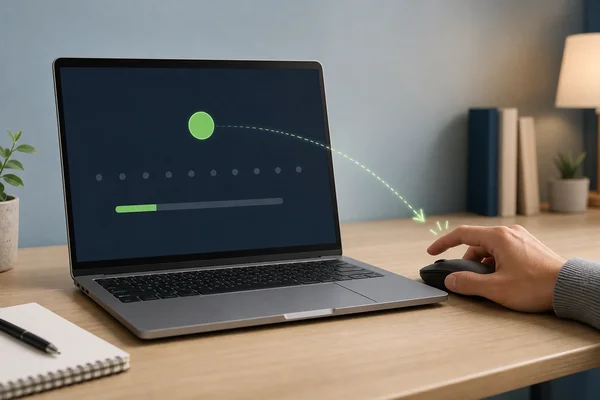
For a simple visual reaction task, many adults land roughly around 200-300 ms, with 200-250 ms often treated as faster-than-average in casual online testing. Scores around 150-200 ms are very fast and usually reflect strong attention, practice, good hardware, and a simple stimulus. Results below about 120 ms should be interpreted carefully because they may involve anticipation, measurement quirks, or non-voluntary assistance rather than a normal visual response.
Here is a practical way to read common reaction time numbers:
| Score range | Practical interpretation |
|---|---|
| Under 120 ms | Rare for true visual reaction; check for anticipation or test conditions |
| 120-170 ms | Elite-level simple reaction territory when repeated consistently |
| 170-200 ms | Excellent for a clean visual click test |
| 200-250 ms | Good to above average for many adults |
| 250-300 ms | Common adult range, especially outside perfect conditions |
| 300-350 ms | Slightly slower, often affected by fatigue, attention, device lag, or task complexity |
| Over 350 ms | Worth retesting under better conditions and watching trends over time |
These ranges are guidelines, not labels. A single number can be moved by the brightness of the cue, the wait time before the stimulus, your mouse or touchscreen, your monitor refresh rate, and whether you were truly ready without guessing. Your best reaction time should be a repeatable pattern, not a single screenshot.

Best Reaction Time vs Average Reaction Time
Average reaction time and best reaction time answer different questions. Average reaction time asks what people typically do across many trials. Best reaction time asks what your fastest clean response looks like when everything lines up.
For self-tracking, the average is usually more useful. If you do 10 trials and get 228, 240, 251, 236, 229, 245, 260, 232, 238, and 241 ms, your average sits near 240 ms. If one attempt lands at 185 ms, it might be real, but it should not define your level by itself. The spread between your fastest and slowest attempts can reveal attention consistency.
This is why many people misunderstand search questions such as "is 200 ms reaction time good?" Yes, 200 ms is good for a repeated simple visual test. It is faster than many casual adult results. But a 200 ms average across several sessions is more meaningful than a single 200 ms click.
A 300 ms reaction time is not automatically bad. It is slower than a typical fast visual click score, but it can happen for ordinary reasons: poor sleep, dehydration, multitasking, a low-refresh display, a Bluetooth input device, a complex choice task, or simply being less warmed up. If 300 ms appears once, retest. If it is your stable average and you are curious about performance, improve your test setup and track a few sessions before drawing conclusions.
Why 100 ms and 120 ms Scores Need Context
People often ask whether a 100 ms reaction time is good. The honest answer is that 100 ms is so fast that it sits near the practical lower edge for voluntary human response in many simple reaction tasks. A score that low can be impressive, but it can also come from predicting the stimulus, tapping early, using a test that handles timing loosely, or reacting to a cue that is easier than a normal visual change.
A 120 ms reaction time is more plausible, especially for highly trained people on a simple task, but it is still exceptional. It should repeat across multiple trials and sessions before you treat it as your real baseline. If your scores bounce between 120 ms and 280 ms, the 120 ms result may be an outlier rather than your typical capability.
Assisted results are a separate category. Artificial muscle stimulation and other laboratory systems can produce response times that are not comparable with an unassisted person clicking a mouse. Those records are interesting because they show how much of reaction time belongs to sensing, deciding, and moving, but they should not become the benchmark for everyday users.
What Changes Your Best Reaction Time?
Your score is a chain of events. The stimulus appears, your eyes detect it, your brain identifies what it means, you choose a response, and your muscles execute the movement. The slowest part of the chain changes depending on the task.
Simple reaction time is usually fastest because the rule is obvious: when the screen changes, click. Choice reaction time is slower because you must choose between options. A color reaction test, for example, may ask you to respond to green but ignore other colors. That extra decision step adds time, but it may better resemble sports, gaming, and driving, where the challenge is not only seeing something but choosing the right action.
Several factors can shift your best reaction time:
- Stimulus type: auditory cues are often faster than visual cues.
- Task complexity: one clear signal is faster than several possible signals.
- Attention: focused, rested users respond more consistently.
- Age and experience: raw speed may change with age, while anticipation and strategy can improve.
- Hardware: display refresh rate, input lag, browser timing, and mouse latency can affect online scores.
- Practice: repeated exposure can improve the specific response you train.
The most important lesson is that "best" depends on the test. A 180 ms result on a simple click test and a 330 ms result on a choice test may both be strong for their task.
How to Test Your Best Reaction Time More Reliably
If you want a trustworthy reaction speed benchmark, make the test conditions repeatable. You do not need a lab, but you do need consistency.
Use the same device, browser, hand, input method, and sitting position each time. Close distracting tabs, silence notifications, and run the test when you are alert. If possible, use a wired mouse or a low-latency input device, and test on a display with a stable refresh rate. Touchscreens can be convenient, but they may not compare directly with mouse clicks.
A simple protocol works well:
- Do 3 warm-up trials and ignore those results.
- Record 10 real trials.
- Remove obvious false starts or misclicks.
- Calculate your average, best clean score, and slowest clean score.
- Repeat on another day before judging progress.
Do not chase one perfect click. A narrower range is often a better sign than one extreme result. For example, five sessions averaging 232-245 ms are more informative than a single 178 ms score surrounded by inconsistent attempts.
Best Ways to Improve Reaction Time
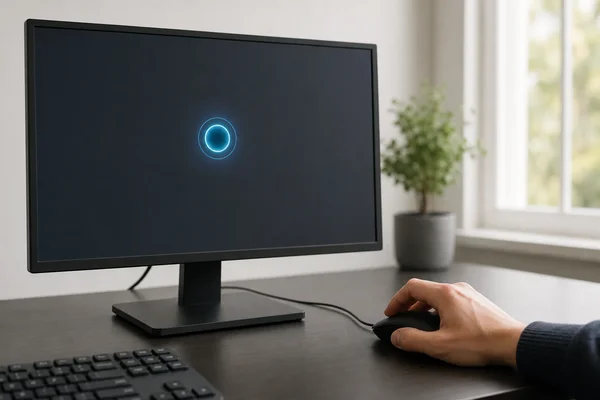
The best way to improve reaction time is to train the exact chain you want to make faster: perceive, decide, and respond. Generic "reflex training" helps less than targeted practice with clear feedback.
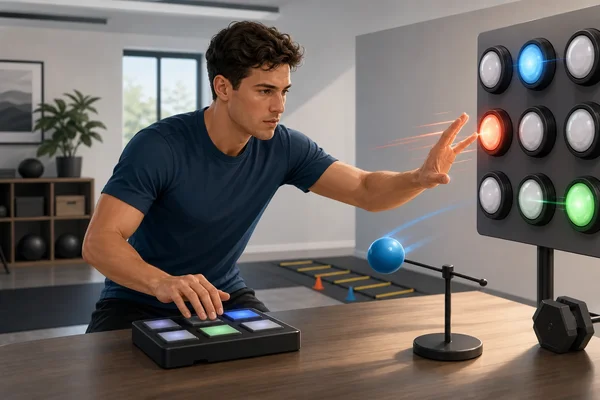
Start with simple reaction drills if you want a cleaner click baseline. Then add choice drills to train decision speed. Color-based tasks, corner cues, keyboard prompts, aim trainers, and rhythm games can all challenge different parts of the response chain. For gaming, train the action that matters: target switching, click timing, movement correction, or key selection. For sports, pair visual cues with footwork or hand-eye coordination rather than sitting still for every drill.
A practical weekly routine could look like this:
- Two short simple reaction sessions to track baseline speed.
- Two choice reaction sessions to train decision-making.
- Two coordination sessions, such as ball drops, agility patterns, or aim practice.
- One rest or light review day to avoid turning fatigue into noisy data.
Lifestyle basics matter too. Sleep, hydration, regular physical activity, and focused attention can all affect reaction performance. Caffeine may temporarily change alertness for some people, but it is not a stable training strategy, and more is not always better.
Progress is usually modest and specific. You may improve at the task you practice before you see broad transfer to sports, gaming, or driving. That is normal. Treat training as skill refinement, not a promise of instant transformation.
Use Your Best Reaction Time as a Baseline, Not a Label
The best reaction time is the fastest clean response you can repeat under fair conditions. For many adults, anything around 200 ms on a simple visual test is good. Around 170 ms is excellent. Around 120 ms is rare and should be verified carefully. Around 300 ms is slower than a fast benchmark, but it is not a verdict on your ability.
The real value comes from tracking trends. If your average moves from 285 ms to 255 ms over several weeks, that is meaningful. If your fastest score improves but your slowest score stays high, you may need better focus and consistency. If your numbers suddenly change and you also have health concerns, use the score as a reason to seek appropriate professional guidance, not as an answer by itself.
For an easy starting point, explore a human reaction speed tool, record several clean trials, and compare yourself against your own future sessions. Your best reaction time is useful when it helps you understand conditions, habits, and practice, not when it becomes a fixed identity.
FAQ
Is 200 ms reaction time good?
Yes. A 200 ms simple visual reaction time is generally good, especially if it is your average across several clean trials rather than a single lucky click. It suggests you are responding faster than many casual adult results on simple online tests.
Is 0.17 reaction time good?
Yes. A 0.17 second reaction time equals 170 ms, which is excellent for a simple visual reaction test. It is more convincing if you can repeat similar scores without false starts and under the same test conditions.
Is 120 ms reaction time possible?
It is possible but uncommon for unassisted simple reaction tasks. Treat 120 ms as elite territory and verify it with repeated trials. If many attempts fall far slower, the 120 ms result may be anticipation or measurement noise.
Is a 100 ms reaction time good?
A 100 ms score is extremely fast and should be viewed cautiously. It may be near the lower edge of voluntary visual response, so repeated evidence matters. Scores around or below that level can also come from guessing, early clicks, or test timing quirks.
Is 300 ms reaction time good?
A 300 ms simple visual reaction time is slower than a fast adult benchmark, but it is not automatically concerning. Retest when rested, reduce distractions, and check your device setup. For more complex choice tasks, 300 ms can be much more understandable.
What age has the best reaction time?
Reaction speed often tends to be strongest in younger adulthood, but the answer depends on the task. Raw speed, experience, anticipation, and decision strategy do not peak in exactly the same way. Comparing your own trend is usually more useful than chasing one age-based number.
What is the best reaction time in the world?
It depends on whether you mean unassisted human reaction, sport timing, online click tests, or artificially assisted laboratory systems. Assisted records can be far faster than ordinary human clicking, so they should not be compared directly with a personal online test.